How to Prepare Your Gwinnett Home for Exterior Painting (And Why It Matters More Than the Paint Itself
Here’s something most homeowners don’t find out until it’s too late: the paint brand barely matters if the prep work was done wrong.
You can put the most expensive exterior paint on the market on a surface that wasn’t properly cleaned, primed, and repaired — and it’ll still fail within a few years. Peel. Crack. Bubble. The paint doesn’t stick to dirt, loose paint, or bare wood the way it’s supposed to. And once it starts going, the whole job comes undone fast.
This post is about what proper exterior painting prep actually looks like, why it matters, what questions to ask before hiring anyone, and how Georgia’s climate specifically affects how long your exterior paint holds up.
H2: Why Exterior Paint Fails Early — and What’s Usually to Blame
Exterior paint fails for a handful of consistent reasons. Understanding them helps you spot the difference between a painter who knows what they’re doing and one who doesn’t.
Inadequate surface cleaning. Dirt, mildew, chalking (the powdery residue that forms on old paint), and oxidation all prevent new paint from bonding properly to the surface underneath. Painting over any of these is like trying to stick tape to a dusty wall — it holds for a while, then lets go.
Skipped or insufficient priming. Primer isn’t optional on exterior surfaces, especially bare wood, repaired areas, or surfaces that have significant chalking. It seals the surface, improves adhesion, and creates a uniform foundation for the topcoat. Painters who skip primer to cut time often produce jobs that look fine at first and start failing within two to three years.
Painting in the wrong conditions. Exterior paint needs to be applied within a specific temperature and humidity range to cure properly. Too hot, too cold, too humid, or applied while the surface is still damp from morning dew — all of these affect how the paint bonds and how long it lasts.
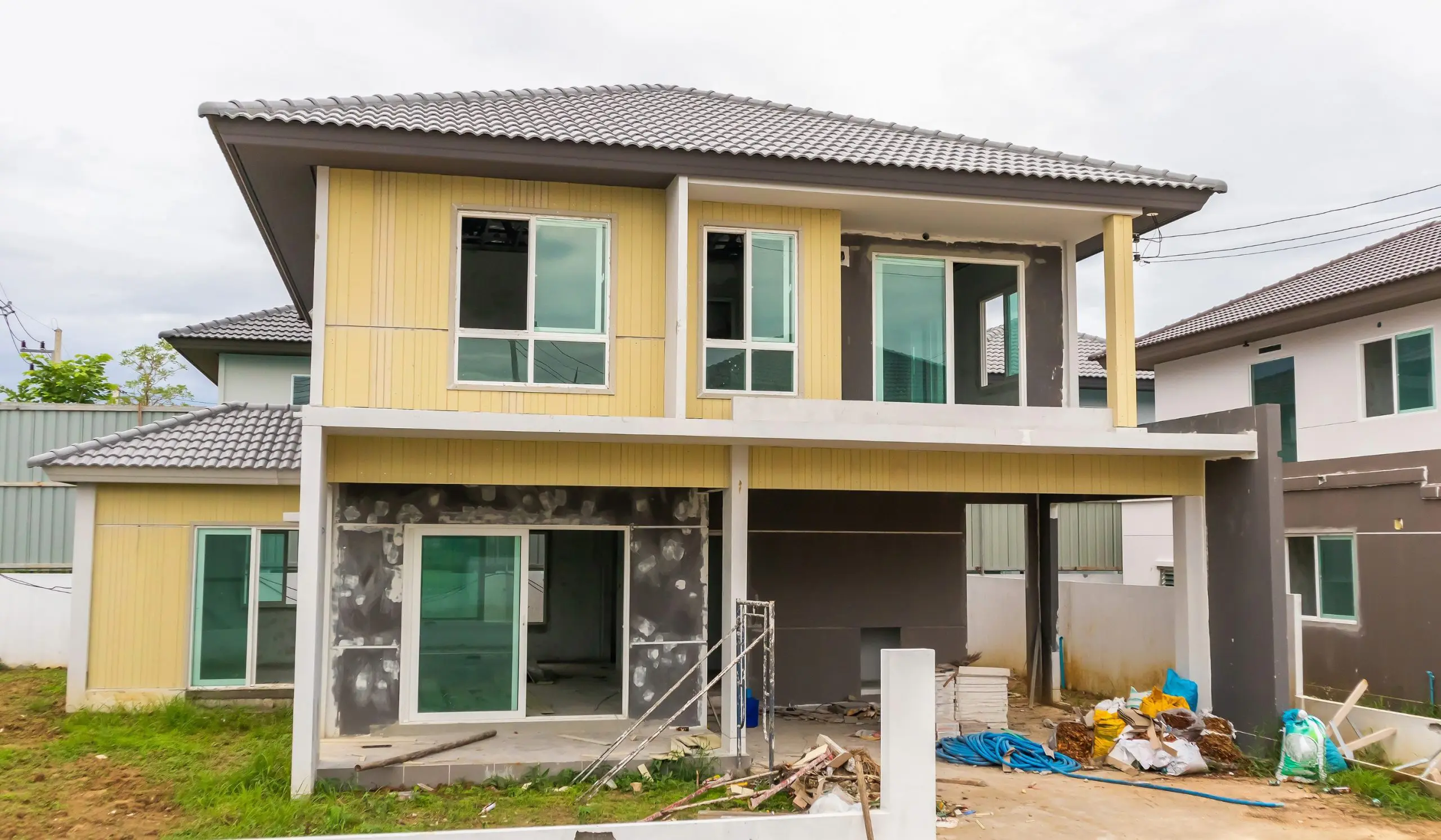
Skipping repairs before painting. Cracks, holes, rotting wood, and failing caulk don’t disappear under a coat of paint — they get worse. Paint over a crack and the crack continues to expand; the paint tears with it. A proper exterior job addresses underlying damage first.
H2: The Right Sequence for Exterior Painting Prep
The sequence matters as much as the steps themselves. Here’s what a thorough exterior prep process looks like on a Gwinnett County home.
H3: Step 1 — Pressure Washing
Everything starts here. The entire exterior surface gets pressure washed to remove dirt, mildew, chalking, spider webs, insect nests, and any loose or flaking paint. The pressure and technique used depends on the surface material — what works on brick is different from what’s safe on hardboard or wood siding.
The house needs to dry completely before anything else happens. On a warm Georgia day that might be 24 hours. In humid conditions, longer. Painting over a damp surface is a common cause of premature paint failure.
H3: Step 2 — Scraping and Sanding
After washing, any paint that’s still loose, peeling, or bubbling gets hand-scraped and sanded. This step reveals what the surface actually looks like underneath — and sometimes reveals problems that weren’t visible before. Rotting wood, rusted fasteners, gaps that have opened up over time.
Sanding also feathers the edges of scraped areas so the new paint goes on smoothly rather than showing hard lines where old paint ended and bare surface began.
H3: Step 3 — Repairs
Rotted wood gets replaced or consolidated depending on severity. Cracks and holes in siding, stucco, or wood get filled with the appropriate patching compound. Rusted metal gets treated. This is the step that most affects how long the finished job holds up — deferred repairs don’t stay deferred. They get worse under paint, and they cause the paint above them to fail.
H3: Step 4 — Caulking
All gaps — around windows, door frames, trim, corners, where siding meets trim — get re-caulked with a flexible exterior caulk. Caulk is the seal that keeps moisture out of the wall system. Failed caulk lets water behind the paint and the siding, which leads to rot, mold, and paint failure. It’s one of the most important steps in exterior prep and one of the most commonly skipped by painters trying to move fast.
H3: Step 5 — Priming
Bare wood, repaired areas, and surfaces with significant chalking all get primed before the topcoat. On some surfaces — raw wood in particular — primer is the difference between a paint job that lasts 10 years and one that starts peeling in two.
H3: Step 6 — Paint Application
With everything properly prepped, the paint goes on. Most quality exterior jobs use two coats of topcoat. The first coat covers the surface; the second coat builds the film thickness that protects against weather, UV, and moisture. On older or more porous surfaces, a third coat may be appropriate.
Paint is applied in the right sequence — body of the home first, trim second — and each coat is allowed to dry fully before the next one goes on.
H2: Georgia’s Climate and What It Means for Exterior Paint in Gwinnett
Gwinnett County sits in a climate zone that’s genuinely tough on exterior paint. Hot, humid summers. Occasional hard freezes in winter. UV intensity that’s higher than most of the country. All of it stresses paint in ways that homeowners in milder climates don’t deal with.
Heat and UV. Direct sun breaks down paint pigments and causes the binder in the paint to deteriorate. South-facing and west-facing walls take the hardest hit. Quality exterior paint with UV-resistant formulation lasts significantly longer than builder-grade paint on these surfaces.
Humidity and mildew. Georgia’s humidity creates ideal conditions for mildew growth on exterior surfaces. Mildew that isn’t properly treated before painting grows right through the new coat. A paint job on a mildewed surface without proper cleaning and a mildew-inhibiting primer will show the problem again within a year.
Temperature swings. Exterior siding expands and contracts with temperature changes. Paint that was applied in the wrong conditions or at the wrong film thickness can crack along these expansion lines. Flexible, high-quality exterior paints tolerate movement better than cheap paint.
Pine pollen. This is specific to Georgia and worth mentioning. The heavy yellow pollen season in spring coats everything — including freshly painted surfaces. It’s best to avoid scheduling exterior painting during peak pollen season if possible, and pressure washing before painting in late spring is particularly important.
Our team understands Gwinnett’s specific conditions. Every exterior painting project we take on in Lawrenceville, Norcross, Buford, and the surrounding area gets the same thorough prep — regardless of how inconvenient or time-consuming it is. The warranty we stand behind only works if the job was done right from the beginning.
H2: What to Ask Before Hiring an Exterior Painter in Gwinnett County
Not every painter prepares the same way. These questions will tell you quickly whether you’re talking to someone who does the job right or someone who’s going to cut corners once you hand over a deposit.
“Does your quote include pressure washing?” It should. If a painter is planning to paint without washing the surface first, that’s a significant red flag.
“How long will you let the surface dry before painting?” The right answer is at least 24 hours, longer in humid conditions. If they say “same day,” walk away.
“What primer are you using, and on which surfaces?” A prepared painter can answer this without hesitation. If they hedge or don’t mention primer at all, ask why.
“Do repairs to rotted wood or failed caulk affect the quote?” The honest answer is yes — if the scope of repairs turns out to be larger than anticipated, the price adjusts. You want to know this upfront, not discover it halfway through.
“How many coats are included?” Two should be standard for a full exterior repaint. One coat is insufficient on most surfaces.
“Who does the actual work?” This is a question that separates family-owned crews from operations that use a different subcontracted crew on every job. The people doing your estimate should be the people doing your project. At Mena’s, they always are.
H2: How Long Should a Quality Exterior Paint Job Last in Georgia?
On a properly prepped surface with quality paint, 7 to 10 years is a reasonable lifespan for exterior paint in the Georgia climate. Some jobs last longer. Some variables — surface type, sun exposure, maintenance — affect the outcome.
Wood siding tends to show its age faster than fiber cement or brick. South-facing walls often need attention sooner than north-facing ones. Homes near tree lines may deal with more moisture and mildew pressure.
You can extend the life of your exterior paint job by:
- Keeping gutters clean so water doesn’t overflow and run down the siding
- Trimming back shrubs and trees that hold moisture against the exterior walls
- Addressing small cracks or gaps in caulk as they appear, rather than letting them grow
- Doing a quick visual inspection each year and noting anything that’s changed
When you do eventually repaint, the preparation steps at the beginning of this post apply just as much — regardless of how good the previous paint job was.
H2: Planning Your Exterior Painting Project in Gwinnett
The best time to paint the exterior of a Gwinnett County home is late spring (after pollen season) through early fall — generally May through September. Temperatures are consistently in the range that paint manufacturers recommend for application and curing, and there’s enough daylight to work efficiently.
Late fall can work for mild days, but temperatures dropping below 50°F at night before the paint has fully cured causes problems. Winter exterior painting in Georgia is possible on warm stretches but requires more attention to overnight lows.
If you’re planning to repaint before selling, give yourself enough lead time — good prep and a quality two-coat application takes more than a weekend. A typical single-family home exterior runs 3 to 5 days for a thorough job, depending on size and the scope of repairs involved.
Ready to get a real number for your project? Request a free exterior painting estimate from Mena’s Quality Painting — family-owned, no subcontractors, and every job backed by a 3-year labor warranty. We serve Lawrenceville, Norcross, Buford, and communities across Gwinnett County.